

Here’s a scenario that plays out inside health systems every single day: a new provider is hired, paperwork is signed, start dates are set, and an announcement is circulated that capacity is expanding — welcome news that, in practice, quickly gives way to waiting.
Why? Because credentialing and payer enrollment are, by their nature, slow, fragmented, and deeply dependent on external institutions that operate on their own timelines, with no sense of urgency around your staffing plan. The average timeline from hire to billable runs 90 to 120 days. For some payers, some states, some specialties? Closer to 180.
During that holding pattern, the provider is present in the building but unable to see a single patient or generate a single dollar.
The concept of “provider readiness” is shorthand for the convergence of credentialing, payer enrollment, and billing eligibility that allows a provider to move from hired to operational. It’s a useful frame — because “not yet operational” doesn’t mean anything went wrong. It means the process hasn’t been cleared. And until it does, the organization is running on borrowed time: paying a provider who can’t yet generate revenue, while the workflows meant to unlock that revenue sit in someone else’s queue.
The operational consequences compound quickly. Patients can’t get seen faster, even though new providers have technically been hired. The strain on staffing continues while enrollment applications idle in a payer’s backlog. And planning assumptions around new service lines, new markets, or new locations can’t move forward (and could potentially fail) because providers were hired before the organization’s readiness infrastructure was in place.
The financial stakes make the operational picture clear. A physician generating $200K+ annually doesn’t start contributing on day one — or day 30, or sometimes day 90. Multiply that across a growing provider network, factor in the cost of manual oversight, and the drag becomes material fast.
Calling this an “administrative” problem is how organizations end up chronically underinvesting in one of the highest-ROI processes they run, and why only 12% of automation investment currently touches credentialing or enrollment at all. Health systems have poured money into electronic health record (EHR) upgrades, revenue cycle tools, and scheduling platforms. Yet the process that literally gates whether a provider can see patients or bill for care is still predominantly run on spreadsheets, managed through email chains, and tracked via status calls that frequently go unreturned.
This is the core problem that Derek Lo, founder and CEO of Medallion, has spent years working to solve. “Credentialing has quietly become one of the biggest operational and financial constraints in healthcare growth,” said Lo. “Health systems are under pressure to expand access, improve margins, and grow provider networks, but many are still relying on fragmented manual workflows that create major bottlenecks behind the scenes.”
The High Cost of Legacy Thinking
Case in point: Credentialing and enrollment have long been treated as back-office functions. Handled by ops teams. Measured in days and documents. Rarely on the CFO’s radar until something goes wrong. But that approach leads to:
- Unpredictable timelines. 55% of healthcare organizations keep credentialing ownership entirely in-house, relying on human coordination across disconnected systems and departments. Even among organizations using a direct or hybrid enrollment model, 39% say tracking application statuses and the manual nature of the process is their single biggest pain point.
- Compounded delays. A missing document here, a payer review cycle there. Each delay feels manageable. But taken together, they quietly erode a timeline by weeks, sometimes months. According to Medallion’s 2026 State of Payer Enrollment and Medical Credentialing report, 46% of hospitals say it takes more than 10 days just to move a provider from initial data collection to committee review, and that’s only one leg of the race.
- High costs. One in five hospitals that can quantify the impact report losing more than $1 million annually from credentialing delays. 69% of health systems, hospitals, and provider groups report losing $1k–$5k per provider per day due to payer enrollment delays.
With that kind of operational fallout and workflows that directly impact revenue, provider capacity, and patient access, “it’s hard to argue these are still back-office administrative problems,” said Lo. Instead, a reframe is needed, from administrative nuisance to strategic constraint.
What Medallion Brings to the Table
Medallion’s platform uses agentic AI and credentialing expert oversight to automate data collection, primary source verification, and credentialing packets to ensure compliance, reduce administrative burden (document parsing, payer follow-up, form completion, status tracking), and get providers ready to deliver care faster.
Consistent outcomes across Medallion’s customer base include a 66% reduction in administrative costs, 99.9% file accuracy, and credentialing that moves 3.5x faster than legacy CVOs. Provider onboarding that traditionally takes days can be completed in hours — with intake time reduced from 8 days to under 2 hours, enabling providers to onboard up to 40x faster (which translates directly to earlier start dates and fewer days-to-revenue).
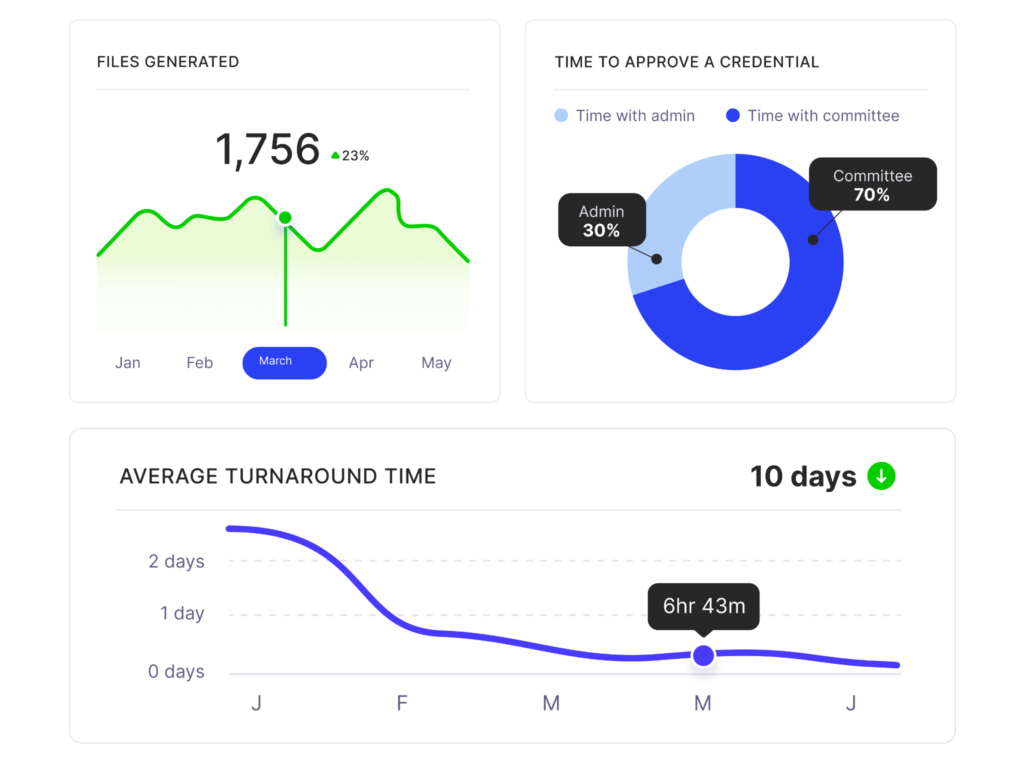
And several recent case studies bear this out:
WellBe Senior Medical reduced credentialing turnaround by 80% (from 30 days down to 6) and onboarded more than 500 clinicians across 7 states faster than their previous manual process would have allowed.
CareBridge avoided an estimated 50% of operational costs they would have incurred building a larger internal licensing team, managed 30- to 60-day provider licensing timelines across multiple states, and moved providers from completed intake to application submission in just 8 business days.
Ivy Rehab Network scaled provider onboarding across more than 700 clinics without adding a single headcount, replacing manual, resource-intensive workflows with Medallion’s centralized platform to turn credentialing from an operational bottleneck into a sustainable growth driver.
The Strategic Case for Rethinking Readiness Now
“The organizations that rethink provider readiness now are going to have a fundamentally different operational advantage over the next few years,” Lo said. They’re also going to need a transformation partner who’s in it for the long haul, especially since credentialing is cyclical.
Medallion operates as an extension of a health system’s internal operations, helping to automate the manual, repetitive tasks while preserving control, with credentialing subject matter expertise embedded into the process and dedicated team members, live chat support, and a robust knowledge center available.
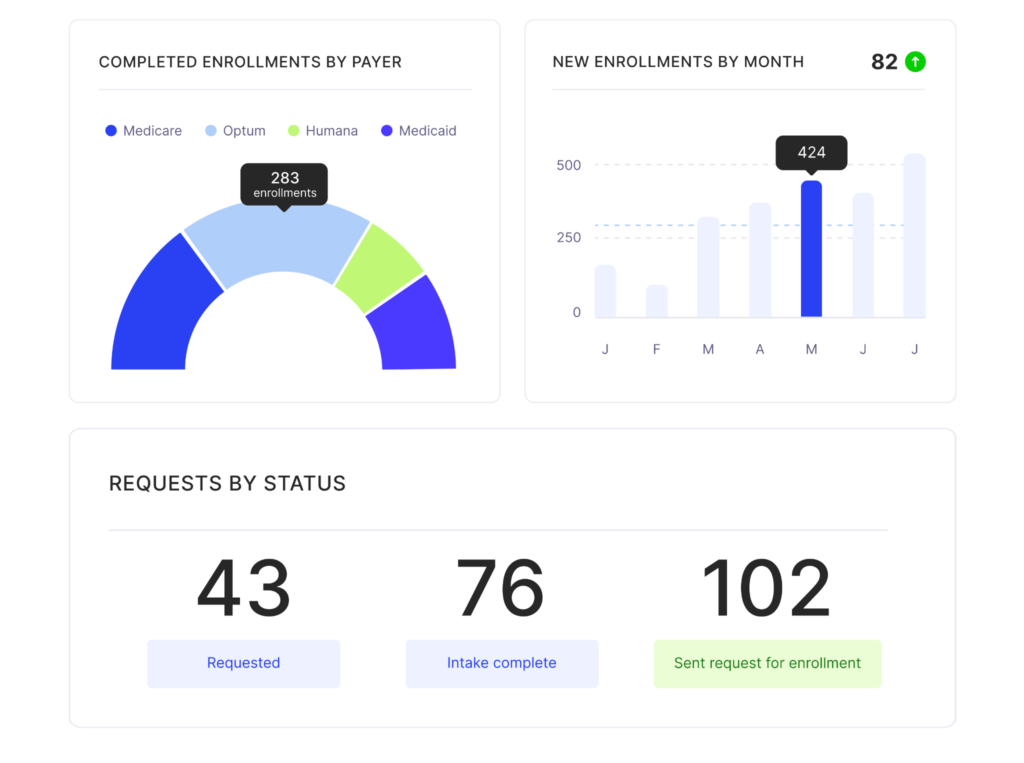
Onboarding, credentialing, enrollment, licensing, and monitoring all operate in one centralized system rather than across disconnected spreadsheets, tools, and vendors. AI-assisted primary source verification (PSV) workflows with credentialing expert oversight means credentialing teams can move faster without adding headcount. Providers spend less time on back-and-forth tasks during onboarding. And real-time visibility into every step of the process, including payer follow-up status and application timelines, replaces the uncertainty that most teams currently accept as normal.
On the risk side: contract-backed service-level commitments mean credentialing and enrollment workflows are executed with consistent speed and accuracy, reducing both operational and compliance exposure. And unlike some platforms that promise speed but deliver inaccurate files, Medallion’s model pairs automated primary source data collection with human review for compliance and edge cases.
See how Medallion can help your organization get providers ready faster.