
ACA exits and ambulatory utilization trends
Happy Thursday Hospitalogists,
Two stories for you today.
KFF dropped a new analysis on ACA Marketplace participation for 2026, and the trend line is worth paying attention to, particularly for health systems with meaningful Medicaid and low-income patient populations. The Marketplace isn't collapsing, but it's consolidating in ways that have real downstream implications for coverage access and payor mix.
The second story comes from the S&P team with insights into MA utilization trends and the ongoing margin squeeze facing managed care organizations.
Enjoy!
BLAKE'S BREAKDOWN
ACA Marketplace Insurer Participation Is Declining, and It's Just Getting StartedCopy anchor linkCopied
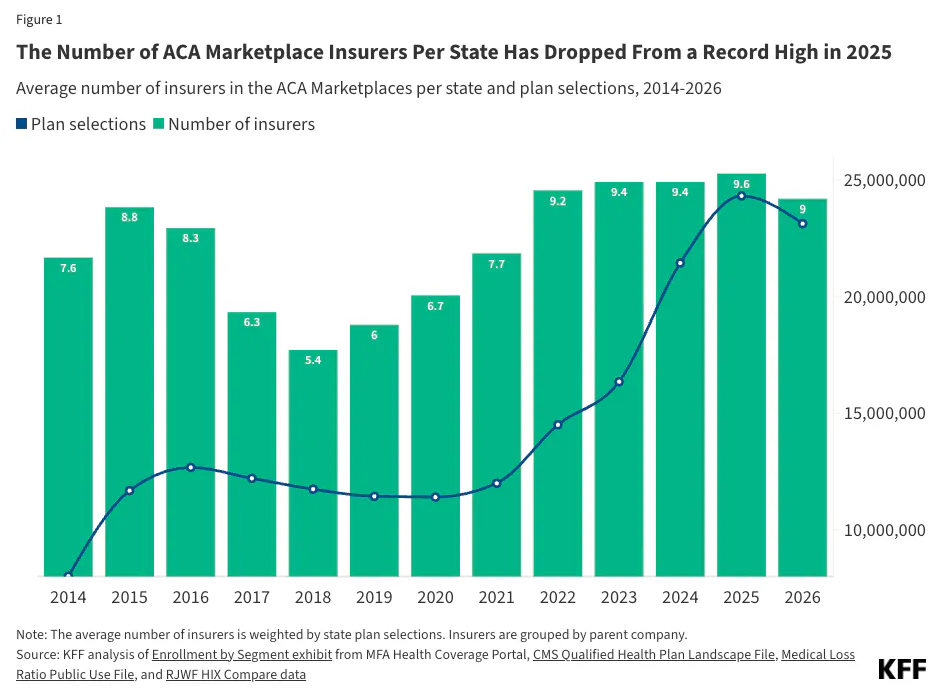
For the first time since the enhanced premium tax credits launched in 2021, insurer participation in the ACA Marketplaces has moved in the wrong direction. KFF published a new analysis this month tracking the shift, and the numbers are worth paying attention to, especially given what's likely coming in 2027.
Here's the TL;DR:Copy anchor linkCopied
- Average insurer participation dropped from a record 9.6 per state in 2025 to 9.0 per state in 2026
- 18 states saw a net decrease in the number of carriers offering plans
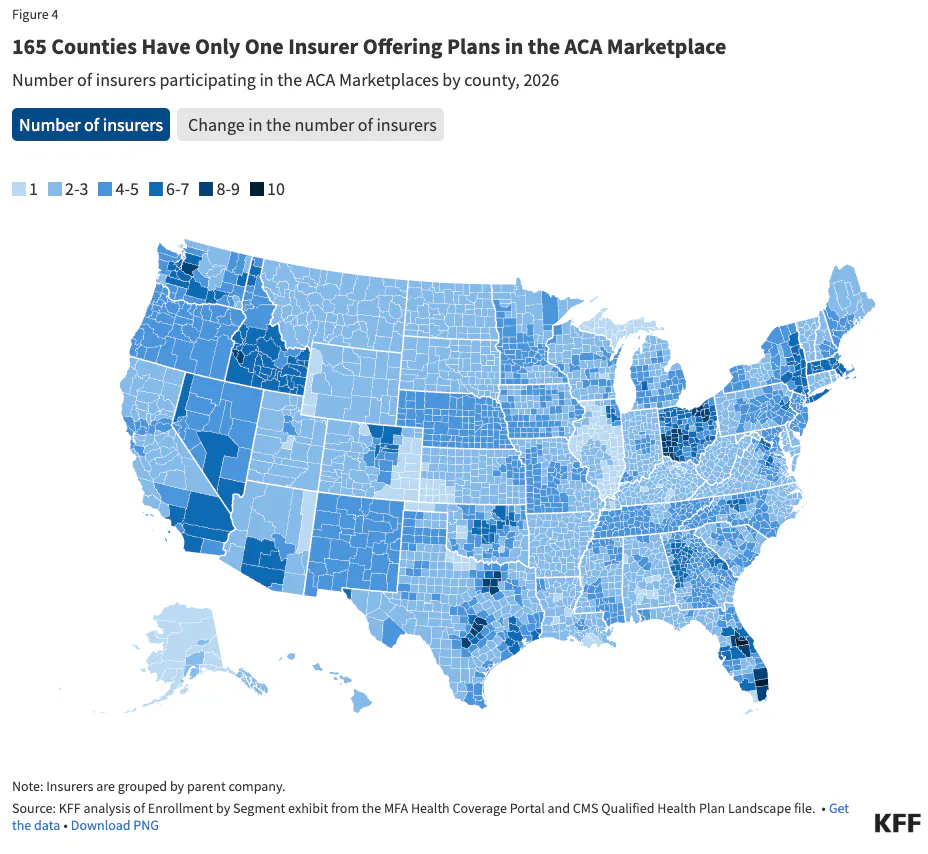
- The number of counties with only a single insurer option nearly doubled — from 93 to 165
- The primary driver: Aetna CVS's full exit from 17 states
Why it happenedCopy anchor linkCopied
With enhanced subsidies gone, open enrollment sign-ups dropped by over a million people relative to the prior year. KFF estimates effectuated enrollment could fall by roughly 5 million from 2025 to 2026.
Smaller risk pools and more adverse selection pressure — healthier enrollees tend to be the first out the door when premiums rise — make the unit economics of Marketplace participation harder to justify. Aetna CVS, which was in 17 states last year, did the math and walked. They weren't alone.
The footprint adjustments are worth noting at the county level too. UnitedHealth pulled back significantly in Kansas (from 87% to 33% of counties) and South Carolina (72% to 37%), while simultaneously expanding in Oklahoma (18% to 74%). Centene went from covering every county in North Carolina to just 63% after its WellCare subsidiary exited the state entirely. More than just headline exits, these are surgical recalibrations of where the business model still works.
The competitive landscape that remainsCopy anchor linkCopied
The carriers still leaning in are worth tracking. United is the most geographically present, offering plans in 30 states. Centene is in 29, Oscar in 20, Elevance in 18, Molina in 14, Cigna in 11, and Kaiser in 10. The Marketplace isn't collapsing, but it is consolidating. Fewer players, more concentrated enrollment, and increasing pressure on the counties where competition has already thinned to one option.
That single-insurer county number is the one I'd watch. 165 counties is still a manageable figure nationally, but for communities that are predominantly rural and already underserved, the absence of competitive pressure means less plan innovation, less pricing discipline, and fewer options for the people who need coverage most. And in 90 of those 165 counties, it's a new development as of this year.
What’s next?Copy anchor linkCopied
The underlying question for health systems, particularly those with significant Medicaid and low-income patient populations, is what a sustained Marketplace contraction means for the payor mix in their communities. More uninsured patients flowing into the system, whether through coverage lapses, premium sticker shock without the enhanced credits, or geographic gaps in availability, is a real operational and financial planning consideration.
Read the full report here.
S&P Research on Ambulatory Utilization TrendsCopy anchor linkCopied
Another interesting article from the S&P team flagged utilization patterns in Medicare Advantage and persistent headwinds facing managed care players a’head’ (get it).
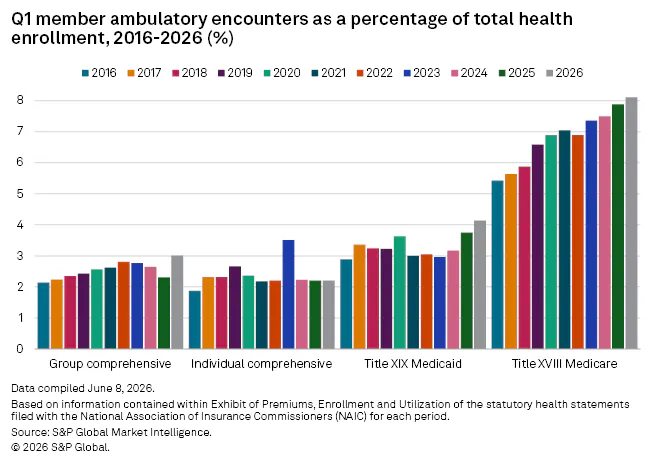
Statutory data flags utilization in the Medicare Advantage line as a worsening problem.
Title XVIII Medicare encounters as a share of total health enrollments in the first quarter of 2026 ran well above the 2016-2025 range for comparable periods, rising from 5.4% in 2016 to 7.9% in 2025 and 8.1% in 2026.
Title XIX Medicaid increased modestly from 2.9% in 2016 to 4.1% in 2026. On a last-12-months basis, Title XVIII Medicare encounters reached 30.2% in 2026 versus 21.8% in 2016, clearly showing that pressures have not normalized.
The key focus areas for health insurers will be identifying which types of medical encounters and cost drivers are accelerating, tightening adjudication and payment integrity to limit avoidable leakage, and testing whether utilization deceleration actually holds as 2025 experience rolls into 2026.
Some insurers indicated that they are employing artificial intelligence to assist with these efforts. The industry expects to treat medical cost ratio and claims trend effectively as leading indicators of margin recovery and evaluate how quickly plans can convert early signals into targeted management actions without triggering downstream utilization.
The utilization curve has not shown a clean reversion, even with pockets of deceleration discussed by management on conference calls. Medicare remains the main margin risk where ambulatory driven utilization intensity, downstream testing and specialist follow on care, and risk adjustment economics all interact.
Health insurers need sustained level control of the ambulatory care pathway while using medical cost ratio and claims trend monitoring as leading indicators to determine whether 2025 levels mature into 2026 stabilization.
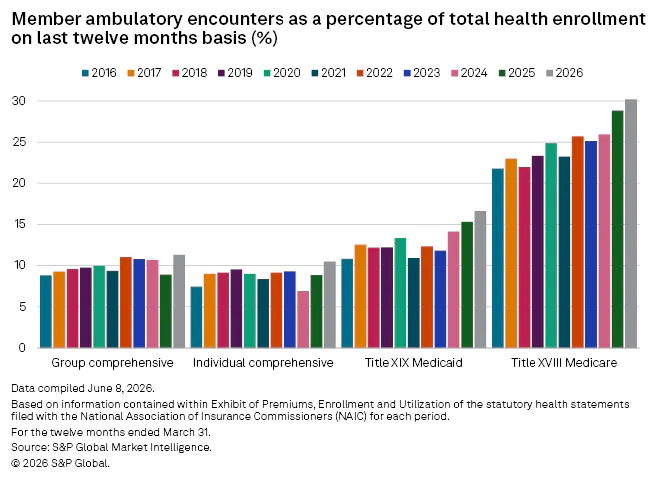
Source: S&P Capital IQ, “High health insurance utilization hits less hard in Q1 2026”
TOP READS AND RESOURCES
- Phil Ozuah, CEO of Montefiore Einstein, talks with McKinsey about how his health system is investing in ambulatory expansion, AI-enabled patient access tools, and tech infrastructure partnerships (Amazon One Medical, AWS) to build a more efficient and accessible care model.
- PwC's midyear M&A outlook finds that health services deal value is holding up even as volume softens, with buyers getting more selective — favoring assets with reimbursement visibility, proven AI impact, and margin durability over speculative growth stories.
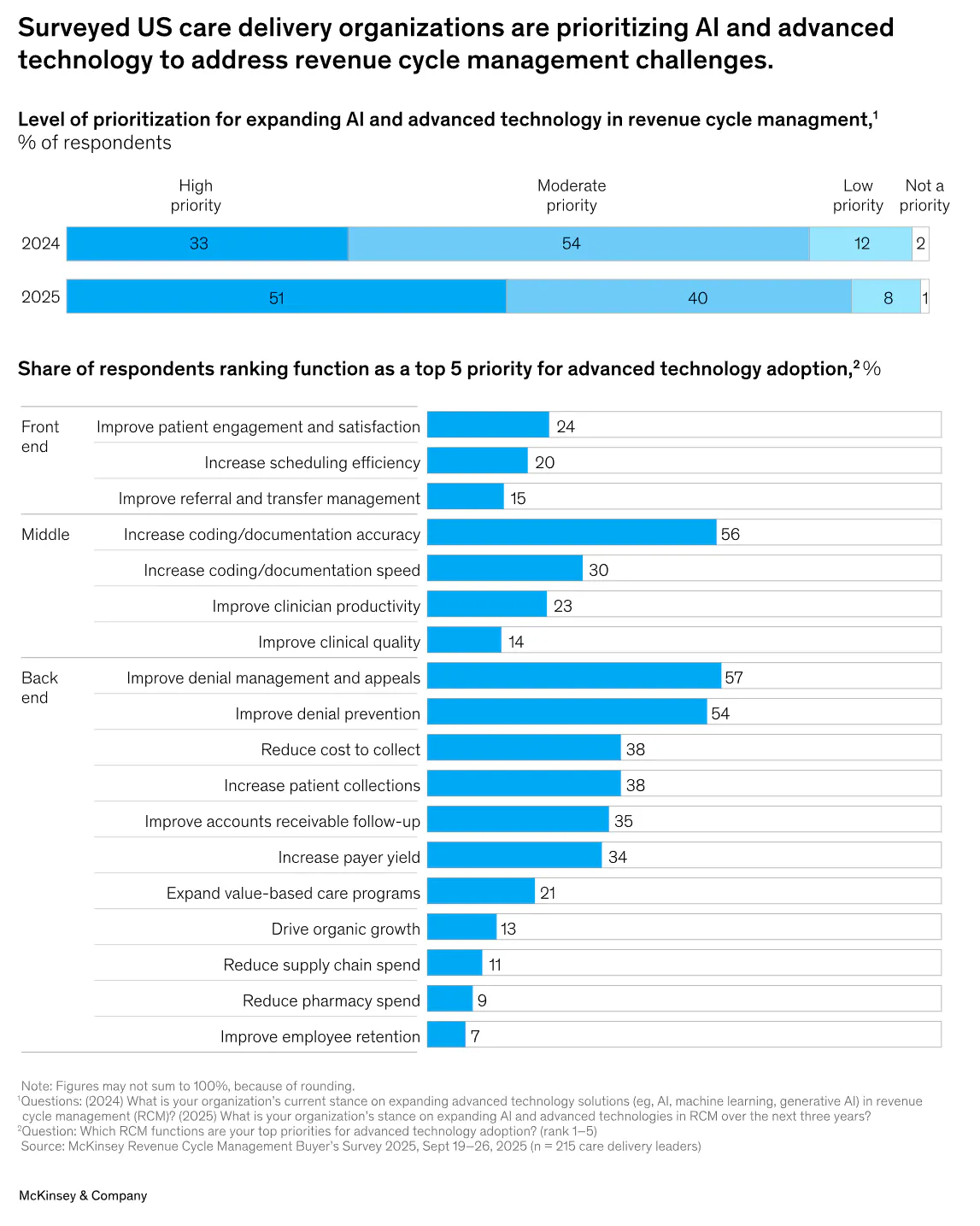
- Healthcare revenue cycle management is at a strategic turning point: survey insights from McKinsey.
Thanks for the read! Let me know what you thought by replying back to this email.
— Blake