Hospitalogy

🏥 Dynamite the Sky

Blake Madden · APR 2

A reminder: You’re receiving this because you were previously subscribed to HealthExecWire. Hope you enjoy.


Happy Thursday Hospitalogists,


A well respected colleague and friend Dr. Jonathan Slotkin has been putting pen to paper lately and I wanted to share his most recent essay for you guys. You can subscribe to his & his team’s deeply thoughtful work here. I recommend you do!


Note: this is a guest post from Scrub Capital and Geisinger’s Dr. Jonathan Slotkin. Subscribe to his newsletter for more thoughtful takes on healthcare!

EXECUTIVE SUMMARY

  • People once believed farming techniques could control nature → they caused the Dust Bowl
  • Today, people believe AI can fix healthcare
  • In both cases, they ignore deeper structural realities
  • Technology without understanding the system underneath leads to failure

Dynamite the SkyCopy anchor linkCopied

Jonathan Slotkin, MD


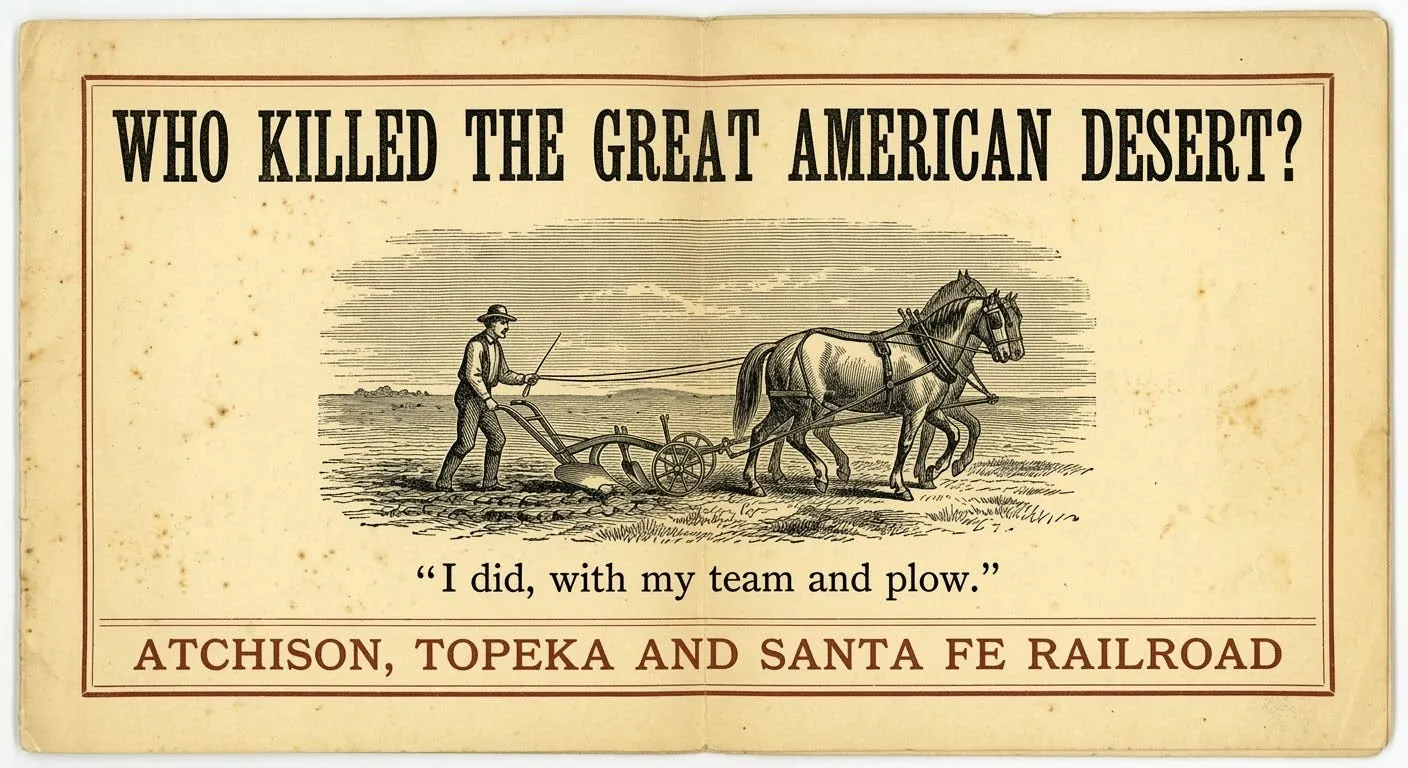
Santa Fe Railroad promotional pamphlet, ca. 1880s. The railroad distributed boastful materials like this to prospective emigrants in the United States and Europe.

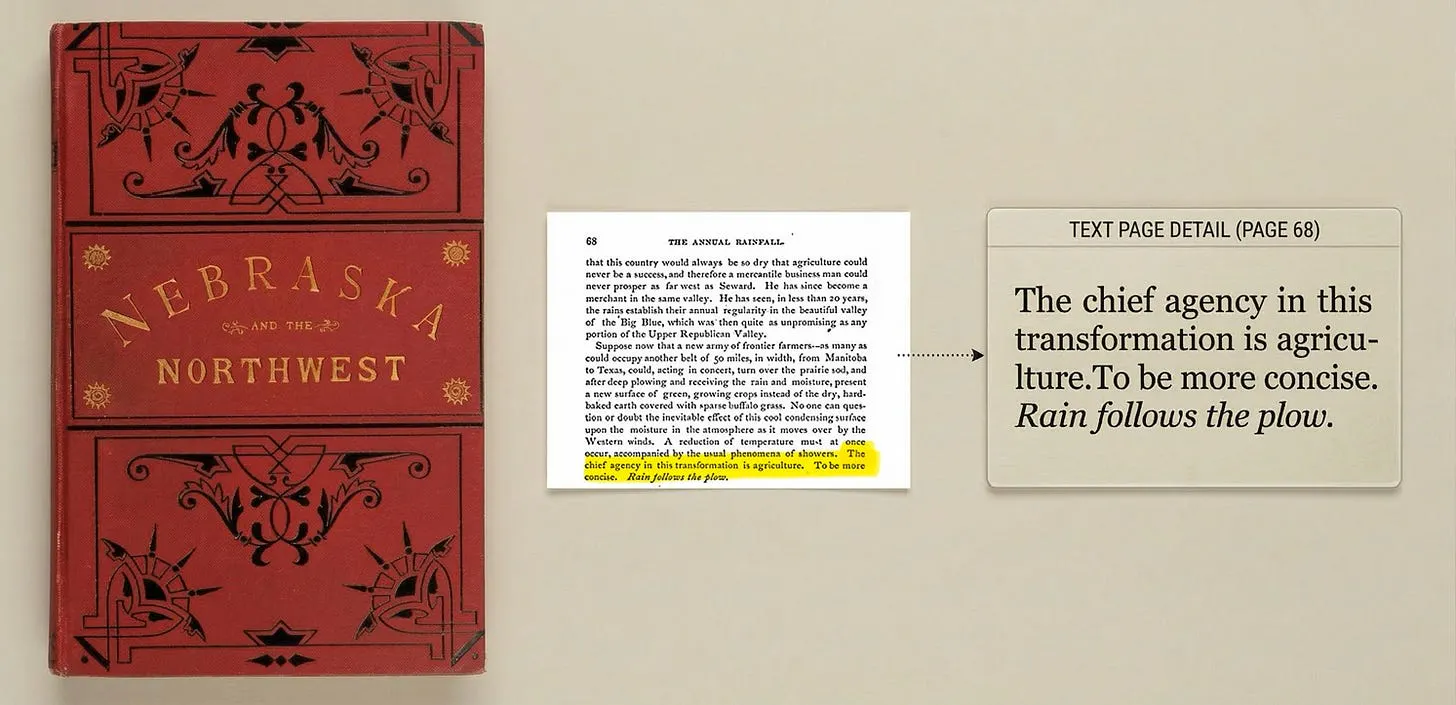
Rain follows the plow. In the 1880s, this was a position of serious people. Published in government bulletins, taught at land-grant universities, believed by soil scientists and the speculators who were opening the Great Plains to industrial agriculture. The theory was that the act of breaking the soil would release moisture into the atmosphere and reshape the climate to accommodate what had been planted. By the 1920s, land-grant universities were promoting “scientific soil culture” that promised the same mastery over the same ground. The suitcase farmers, speculators who didn’t even live on the land, kept believing that the right technique applied at sufficient scale would make the land cooperate.


Charles Dana Wilber, “The Great Valleys and Prairies of Nebraska and the Northwest,” 1881. Page 68. Wilber was a land speculator and journalist who coined the phrase that launched a million acres of plowing under the belief that disturbing soil would release moisture into the atmosphere and cause rain.

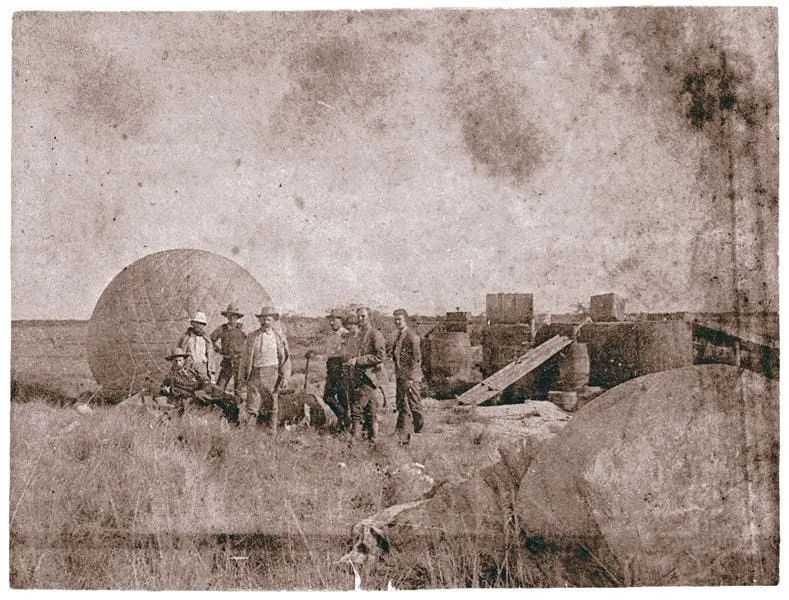
Another approach was cruder. In the 1890s, a competing theory held that concussive vibrations in the atmosphere could produce rain clouds. Alfred Nobel had patented dynamite a few decades earlier, and Congress funded experiments on the Texas plains where government agents and private industrialists detonated explosives in the sky, trying to shake the moisture loose. Men standing in dirt firing explosions at nothing.


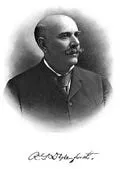
Robert St. George Dyrenforth. Patent attorney, self-styled “concussionist,” and the first person the U.S. government hired to make it rain with explosives. Later nicknamed “Dryhenceforth.”

Dyrenforth’s team on the Texas plains near Midland, 1891. The oxyhydrogen balloons carried dynamite to altitude before detonation. Congress funded the experiments. Scientific American called them “an expensive farce.”

It’s too easy to just dismiss these people as fools. Cloud seeding is a real agricultural method. The error was not in trying to make it rain. It was in ignoring what held the ground together while they did. By the 1920s, the dynamite was gone. But the conviction that the land would yield to the right intervention was not.


By 1929, the acreage under cultivation had never been larger. Capital flowed in. The suitcase farmers bought acreage, planted, and left, returning only to collect. The economics looked irresistible. The theory seemed sound.


What none of them examined was the grass.


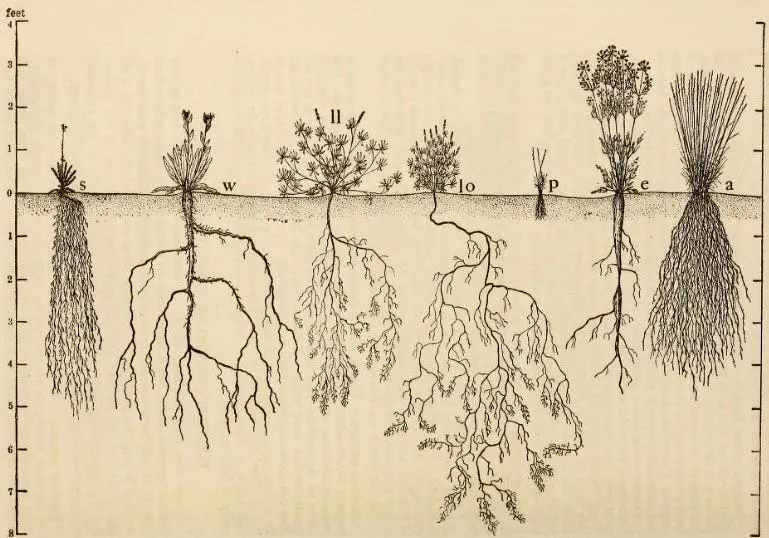
Prairie root systems, from J.E. Weaver’s botanical studies at the University of Nebraska, ca. 1919. A few inches of unremarkable grass above the surface. Five to eight feet of biological infrastructure below it.

Buffalo grass in the plains grew low and unremarkable. It was not a cash crop. It could not be sold. From above it looked like the thing standing between the farmer and a higher yield, a holdover from an untamed landscape. What was invisible from above was what happened below. Those root systems ran five and six feet into the earth. They held the topsoil in place. They regulated how moisture moved through the soil column. They were the biological infrastructure that made the land capable of supporting anything at all, built over thousands of years by processes that could not be replicated on an agricultural timeline.


So plowing looked like progress. For a few years it was indistinguishable from it.


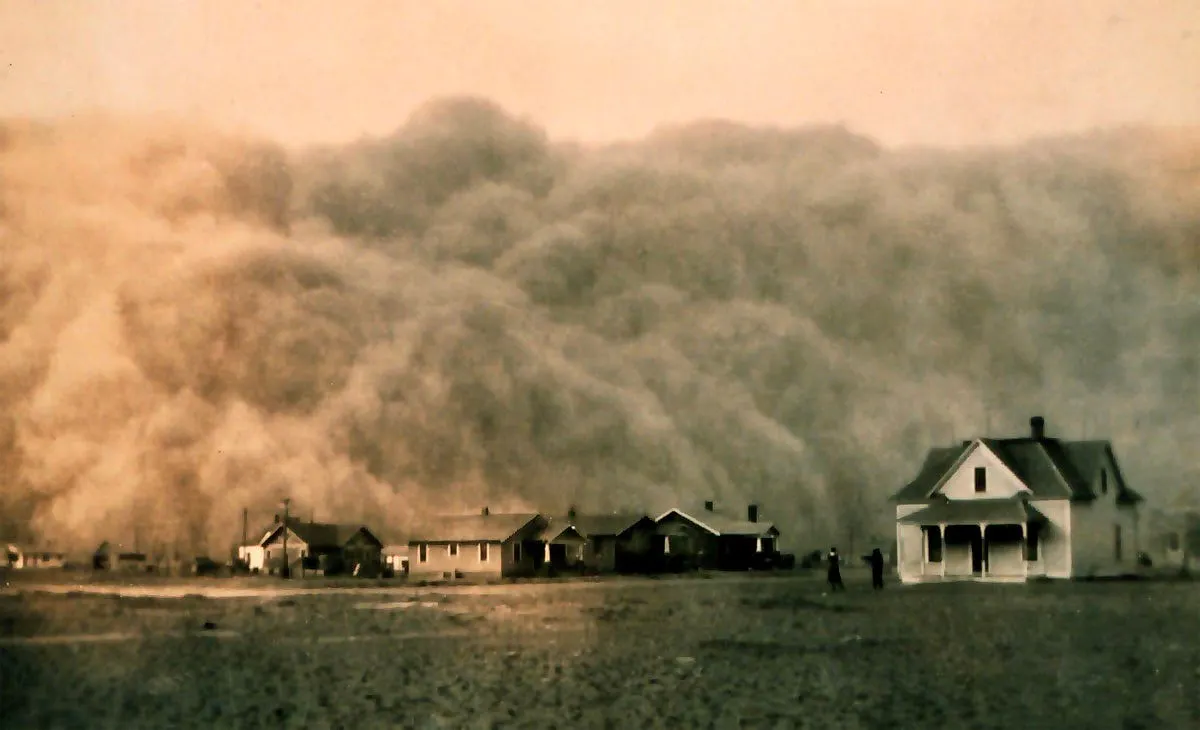
But rain had never been following the plow. And then the rain stopped. In May 1934, a single storm blew three hundred million tons of topsoil off the southern plains. With the anchoring buffalo grass gone, the dust storms, called black blizzards, buried farmhouses, closed schools, turned noon to midnight across five states.


Dust storm approaching Stratford, Texas, 1935. NOAA/George E. Marsh Album.

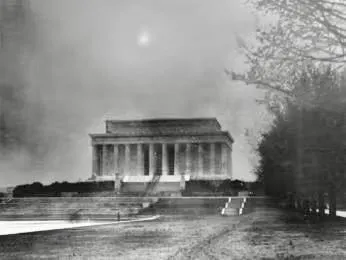
In March 1935, a soil scientist named Hugh Hammond Bennett, who had spent years warning anyone who would listen, testified before Congress about the crisis. He talked slowly. He was stalling. He knew a dust cloud from the plains was rolling east toward Washington. Midway through his testimony the sky outside the hearing room went dark. The senators walked to the windows. Congress passed the Soil Conservation Act that same year.


The Lincoln Memorial during a Dust Bowl dust storm, Washington, D.C., 1935.

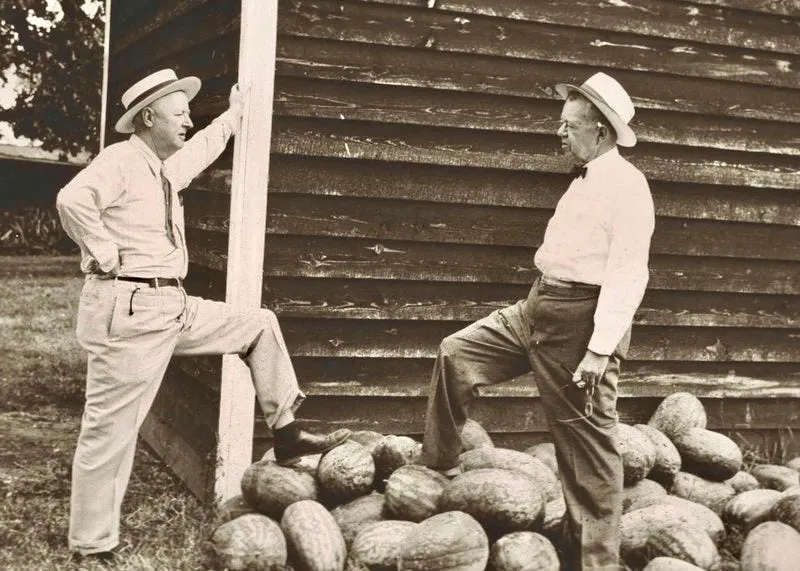
A picnic for tenant farmers of the Duke Power Co. near Mooresville, North Carolina. Dr. Hugh Hammond Bennett (left), first Chief of the Soil Conservation Service, and Mr. Roach Stewart (Duke Power Co.)

The wheat was fine. The root structure that made the land fertile had been stripped out in pursuit of faster yield, and no amount of capital or conviction that rain follows the plow could substitute for what was gone. The farmers who survived the 1930s were the ones who had studied what the land could actually support, who understood that what a piece of ground can grow is determined below the surface.


Every complex system has root structure that outsiders cannot see, and insiders take for granted.


All that’s really new in 2026 health care is the conviction that large language models and AI agents have collapsed the timeline. When I walked the exhibit hall at ViVE and HIMSS this year, the pitch was the same at every booth. AI has become the new vehicle for old hopes. For the better part of two decades, digital health has promised the orchestration layer that finally makes the system behave like a system. The ambition is not new. The certainty that this time the technology will deliver it is the strongest it has ever been.


U.S. health care does not move slowly because the people inside it are slow, though a deep strain of risk aversion trained into it contributes more than many appreciate. It moves slowly mostly because fee-for-service reimbursement pays for volume rather than outcomes. No single fact shapes the system more than this one. The entire institution is organized around a business model that rewards doing more, and it has been organized this way for decades. Until that structure changes, most of what gets built on top of it is decorative. Many misread the friction as a slow sales cycle. It runs deeper than that. How the United States pays for care determines what any technology can actually do once it’s inside.


I recently watched a company demo an AI care coordination platform. Impressive product, well-funded company. Someone asked what happens in settings where primary care physicians are on a productivity model that gives them fifteen minutes per visit, and the platform’s recommended actions require time that doesn’t exist in that model. The founder gave an answer about workflow integration. It didn’t change the fifteen minutes.


Some of what AI does in health care works right now, and it works for a specific reason. LLMs are language machines. Physicians are drowning in language: notes, messages, prior authorizations: the documentation load that multiplies every year. The relief is immediate and usually measurable in the same way it’s measurable for anyone whose daily work involves processing large volumes of text.


Revenue cycle management, structured and high-volume, is the same. They pay off inside existing workflows because nothing underneath needs to change.


The orchestration play is something else. The company that promises to become the intelligent layer across the care continuum, coordinating payers, providers, and patients through a set of AI agents. That requires everything underneath to change: workflows and the fundamental economics of how health care works. The technology may be ready. But the system absorbs change at its own pace, and no improvement to the technology accelerates that, especially when the underlying business model is the same.


This is not true everywhere. Sequoia’s early bet on Stripe reshaped payment infrastructure on a fund’s timeline. A developer choosing Stripe over a legacy processor loses nothing and gains everything on day one. Rain followed the plow. A health system adopting an AI platform still gets paid the same way it did yesterday. Health care’s customer cannot adopt differently until it is paid differently, and no amount of deployed capital changes that from the outside.


VC fund economics compound this. The degree varies by stage and mandate. But the pattern is consistent: a fund with a deployment clock needs companies that show traction on a timeline that brings value like the next markup. Health care resists the timelines capital needs it to follow, and bigger funds intensify the pressure because the acreage they need to plant across expands with every raise.


So the narrative stretches to fill the gap. The pitch becomes about the world as it should be rather than the world as it is. Meanwhile the deployment schedule assumes the system has already transformed. There are suitcase farmers in health care. Funds with GPs that have never walked the halls of a health system, backing companies with no institutional knowledge or contracts, planting from a distance, returning only to collect.


In venture, conviction is the highest compliment. It applies to investors and founders alike, the fund that bets before consensus and the founder who builds or pivots through the trough instead of caving at the first headwind. In health care, conviction without root knowledge breaks ground fast. What blows away is everything that was holding the surface together.


The system’s desire to do better is almost always genuine. I work with people who chose this field because they wanted to take care of patients and with builders and investors who spend their days up against economics that make it harder than it should be.


The founders who will build durable companies in health care have spent enough time inside the system, or selling to it, that they’ve stopped believing rain follows the plow. They know what can grow depends on what’s underneath, and that changing what’s underneath is generational work. The companies that last will be the ones that found ground that can already support what they plant.


The conviction that we can invent our way out of problems that we have spent a century building is an especially American strain of optimism.


The southern plains produce more wheat today than they did in 1929, but on thinner soil, supplemented by aquifer irrigation and synthetic fertilizers. The root structure never fully came back. What did come back took decades of contour plowing, shelter belts, and cover crops. Unglamorous things. No one called them innovation at the time.


Jonathan R. Slotkin, MD

Co-Founder and General Partner, Scrub Capital

Chief Medical Officer for Strategy and Growth, Geisinger

Practicing Neurosurgeon

LET’S TALK AGENTIC AI IN PRIMARY CARE, FAM

The healthcare industry cannot stop talking about AI. But most of what I’m seeing is fairly high-level, without practical application.


On April 28, I’m going to dig into the specifics of how AI is changing primary care.


And there's a reason to start there. Primary care is where the patient relationship begins. Whoever owns that relationship owns attribution, downstream revenue, and loyalty. It's the highest-leverage entry point for AI in the entire health system.


Yet most organizations are still treating it like a cost center. That's the gap I want to close.


Join me and Lumeris on April 28 to explore what leading health systems are doing to turn primary care into a strategic advantage in 2026.

Thanks for the read! Let me know what you thought by replying back to this email.


— Blake  

The conversation doesn't have to stop here
Keep learning and connecting in the Hospitalogy Network

EVENTS  |  FEED  |  LIBRARY  |  DIRECTORY

🏥 Hospitalogy Membership Copy anchor linkCopied

I'm building a community of leaders in strategy, finance, and ops

at hospitals and health systems to help us connect, learn, and grow together.

Get Hospitalogy in your inbox

The weekly read for the people running the business side of care delivery.

Written by Blake Madden

By Blake Madden

Hospitalogy

The weekly read for the people running the business side of care delivery.