
October Recap
MA networks narrow, Stars go to court, and payers get their margin back
Hospitalogists,
As is customary fashion, it’s the end of the month (ok, a week past it), and so you’re getting an absolute doozy of a send related to all of the top news, analysis, and resources you may have missed during the month of October.
Buckle up!
Hospitalogy HeadlinesCopy anchor linkCopied
The stuff I’m tracking from the month and need-to-know for Hospitalogists nationwide
Payors and provider earnings highlights from October. UnitedHealth’s Q3 was a major tell on where the vertically integrated players are…playing - density at scale, and cutting the fat continues. For instance, Optum Health went from $41M to $735M in operating earnings all the while revenue fell ~10%, medical costs dropped ~$3B, and MA membership declined 840K YTD.
- Not every payor is cruising, to be fair. Centene raised its EPS outlook to more than $5.20 and now expects its Medicare business to break even a year early, but it got there partly by cutting ~6,000 heads. Then Alignment, in troubled waters in 26, lowered its outlook.
- Stars in court (AKA the Stars appeals process now runs through federal court). The 2027 ratings came out, and within a day the ratings themselves were the litigation:
- Alignment’s flagship H3815 contract fell to 3.5 stars, cutting its share of members in 4+ star plans from 98% to 25%. Alignment sued CMS on 10/9, claiming well over $200M in lost 2028 payments.
- Clover’s PPO hit 5 stars only because CMS dropped 20 measures to comply with Clover’s May court win. With those measures included, it’s a 4.5. So one 5-star contract this cycle exists because of a court order.
- Humana went from the year’s biggest loser to its biggest winner: ~20% of members in 4+ star plans for 2026, 95% for 2027.
- By month-end at least 5 plans had sued, and CVS/Aetna’s suit challenges 28 measures and claims ~$2B in lost payments. Once one plan wins a rescore by suing, every plan that fell below 4 stars has a reason to try.
- Second front: CMS’s 10/16 proposed rule would make MA plans verify provider directories every 90 days and publish an accuracy score, and would tie PBM fees to fair market value rather than drug prices.
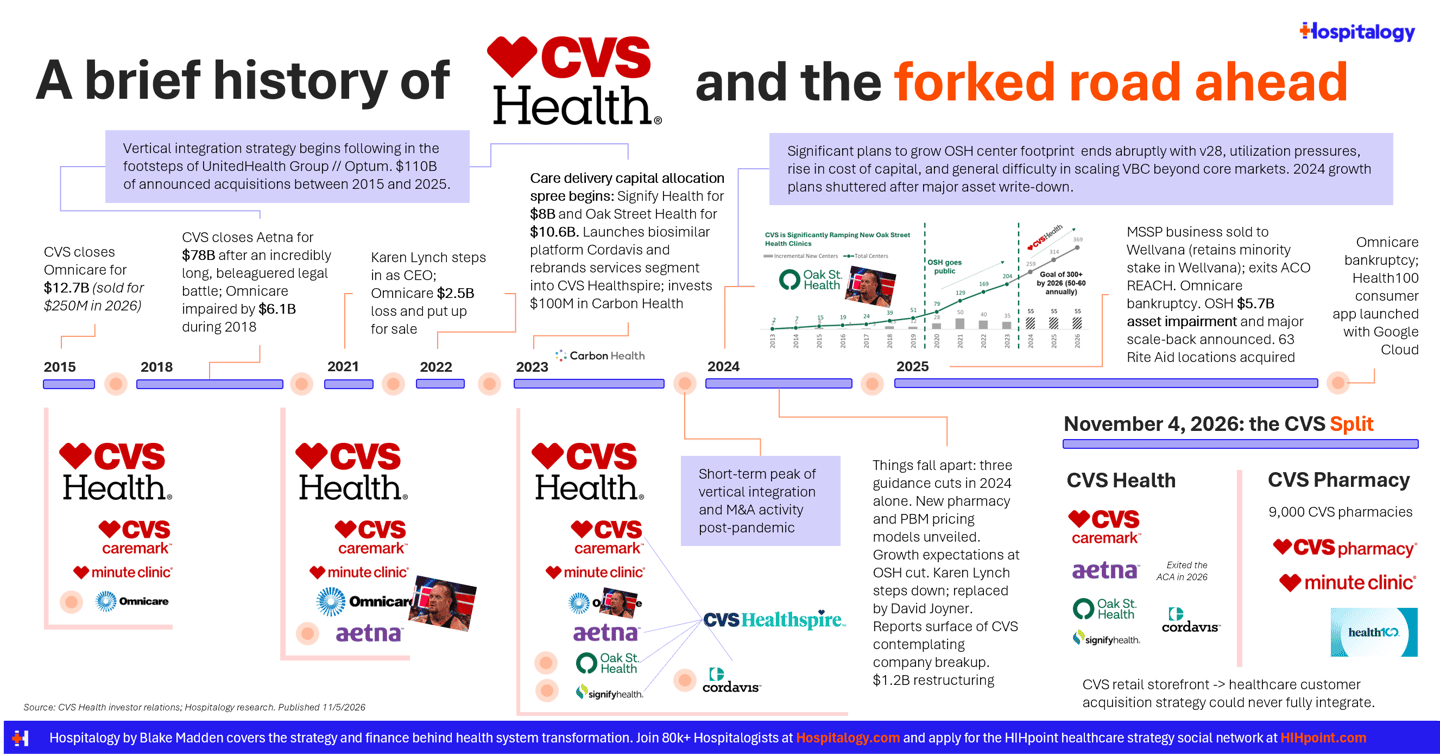
- CVS is breaking itself up into 2 companies - retail pharmacy and storefront (CVS Pharmacy, MinuteClinic, Health 100, etc.) and healthcare vertically integrated behemoth (Aetna, Caremark, Oak Street, Signify, etc.).
Some hospital earnings quick hits, with more analysis to come from me on the hospital side in short order:
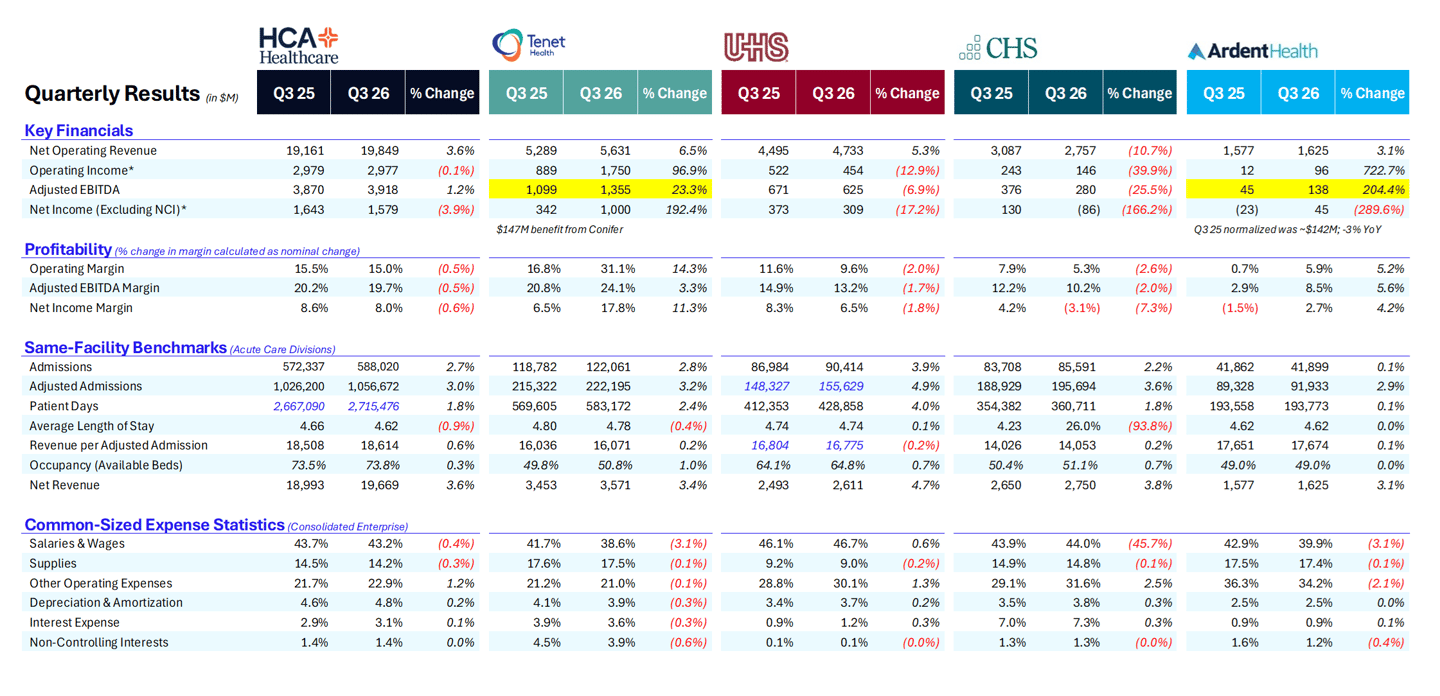
A quarter of hospital margin contraction as analysts turn toward 2027 outlooks:
- HCA took a ~$400M pre-tax hit from payer mix as exchange enrollees lost coverage and showed up uninsured.
- Uninsured hit 10.5% of adjusted admits (vs. 8.5% prior year) as exchange AA’s fell 19%, which translated to a ~$400M EBITDA hit. Full-year mix drag at or above $1.2B while supplemental guide was raised to $600-800M. Soft elective procedure volume raised analyst questions.
- Meanwhile, Tenet, ahead of the curve as far as its footprint with USPI and the shifting outpatient tides, continues to outperform and showed its current macro resiliency. Apart from a $147M benefit attached to the Conifer transition back to Tenet ownership (from joint with CommonSpirit), Tenet’s adj. EBITDA grew grew 12.9% but margin contracted slightly. I also found Tenet management’s commentary around the nonprofit multiples for Surgery Partners and AmSurg hilarious (saying they deserve a more premium multiple given their USPI platform).
- UHS said exchange volumes fell 17% and former ACA enrollees are going uninsured at nearly one-to-one. 2026 will end up landing at the low end of its guidance.
- CHS cut its outlook amid struggles with uninsured dynamics and acuity given ongoing challenging macro environment in their markets. Sigh.
- Kaufman Hall’s flash report had 43% of hospitals in the red on a 2.5% year-to-date margin, and Strata’s data showed median margins only reached 0.7% in June.
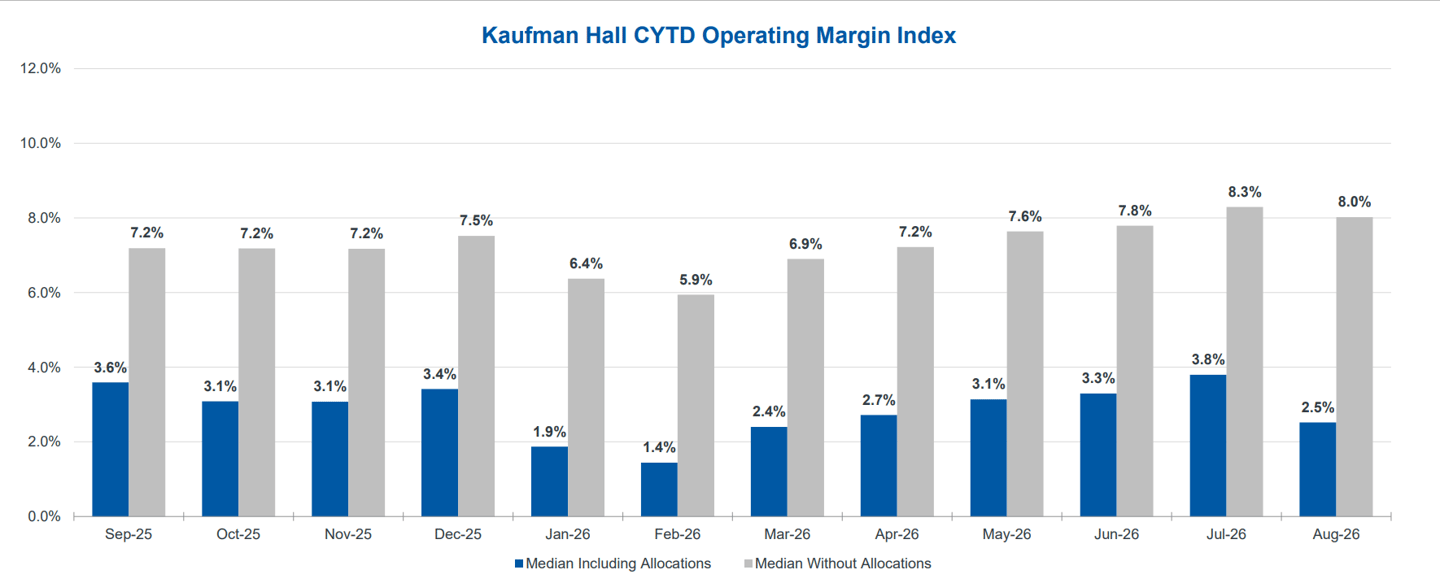
- Seems like the ACA subsidy cliff is landing on hospital P&Ls while most insurers reprice around it (or exit it altogether).
North Carolina vs. Atrium: a 3-week soap opera. If you want a case study in payer-provider tension with a state as the payer, here’s the timeline:
- 10/6: Atrium launches an “Affordability Protection Program” that offsets the cost-sharing penalty the State Health Plan built to push members away from Atrium.
- 10/9: The plan sues and asks for a TRO.
- 10/13: TRO denied.
- 10/14: The plan moves most Atrium sites out of network, mid-open enrollment.
- 10/27: They settle. Multi-year deal, Atrium moves into the in-network Access tier, the copay program ends, the suit gets withdrawn.
- Meanwhile Michigan’s AG filed a 116-page antitrust complaint calling BCBSM’s 65% statewide share (79% in PPO) a “Blue Conspiracy.” The common thread: a state is now a party to the price fight, either as the buyer (NC) or the enforcer (MI). And Atrium’s copay play worked as leverage, so expect other dominant systems to keep it in their back pocket.
340B rebates go live 1/1/27
- HRSA approved 10 drugmakers on 10/1, including AbbVie, Amgen, AstraZeneca, BMS, Merck and Pfizer.
- AHA, the Maine Hospital Association and 4 safety-net hospitals sued on 10/9, AHA’s second suit over the model. AHA puts the administrative cost at more than $1B a year.
- ASPE published a brief on 10/8 arguing the 340B spread pushes hospitals toward consolidation and higher spending, in support of the proposed ASP minus 33.4% cut.
- Missouri’s AG ordered Eli Lilly to drop its 340B claims-data requirement for hospitals. States are enforcing 340B access on their own now.
- The OPPS final rule dropped 11/4 with 340B drugs at ASP minus 28% (not 33.4%) and the remedy offset at 2% (not the proposed 3%). Smaller cut than feared, still a cut, and still stacked on Medicaid work requirements.
CMS can now find, suspend and exclude on its own.
- HHS handed CMS OIG-style exclusion authority over Medicare and Medicaid providers, effective immediately. Add an RFI on pulling fraud contractors’ investigation choices in-house, payment suspensions hitting direct-to-Medicare care-management startups, and a 20-year sentence for Herb Kimble in a telemedicine and DME scheme. If your company bills monthly care-management codes at scale and your revenue lines up neatly with a billing boom, plan for an audit.
Epic’s iron grip, and the front door getting rebuilt for AI agents.
- STAT’s “Inside Epic’s Empire” series (fantastic) opened 10/28 with executives at 12 companies on Epic’s app marketplace saying Epic undercut them through data-access denials and fees. Epic says it provides more data connections than federal law requires. Same week:
- ONC’s HTI-5 final rule cut 14 of 60 certification criteria, dropped AI model-card requirements, and punted on information blocking.
- Zocdoc opened its booking network to AI agents. Google Gemini, Amazon and Instinct are already connected, and agent traffic is up nearly 30x since July.
- Healthcare needs a store: Who better than Walmart? Walmart relaunched Better Care Services as a marketplace run by General Medicine (watch my fireside chat with Elliot Cohen here).
- NYU Langone embedded OpenEvidence inside Epic systemwide, across ~12.4M annual outpatient visits.
Employers are coming for their middlemen.
- DOL finalized its PBM disclosure rule on 10/29: PBMs disclose rebates, spread and other compensation to self-insured clients at contracting and every 6 months starting July 2027, with regulators projecting ~$22B in savings over a decade. PBMs hate this one thing!
- And 6 employers, including Kraft Heinz, Ralph Lauren and Whirlpool, sued UnitedHealth as their TPA, alleging it withheld claims data and paid its own providers above-market rates. UnitedHealth says it strongly disagrees.
- Plus CMS and DOL got Amazon, Google, Meta, Oracle and Axon to back electronic prior auth for self-funded plans.
- Self-insured employers are starting to treat the TPA and the PBM as counterparties
Rules and red tape are profit pools - for the short term. STAT’s investigation found iMPROve Health, a nonprofit No Surprises Act arbitrator, went from a loss in 2022 to a 70% margin, with revenue up 13x. Nonprofit! 70%! Color me shocked. This shit is going to change in short order.

Elevance added on its call that arbitration pressure is much more pronounced in its ASO book, meaning jumbo self-funded employers are paying for it.
The coverage cliff is getting built in paperwork.
- CMS’s proposed ACA rule would hold all subsidies until eligibility is verified, starting with 2028 coverage, and require annual re-verification.
- Brokers are already suing over the registration freeze.
- A federal judge vacated CMS’s “medically frail” definition for Medicaid work requirements on 10/29, and 5 governors had asked HHS on 10/1 to delay the whole thing. Work requirements still start in 2027. Still a mess.
- Standalone Part D premiums are projected to jump 50%, from $34 to $51 a month, and there are zero $0-premium PDPs for 2027.
MGB is running on investment income. Mass General Brigham ran a 0.3% operating margin in FY25 ($59M) against a $2.38B total margin, and it’s cutting again, this time into clinical lines, including general pediatric inpatient admissions at Mass Eye and Ear. Its stated healthy-margin target is ~1.5%. They’re also downsizing the hospital at home program, once the largest in the nation, amid losses.
Narrow networks and HMOs, and a repeat of the 90’s? UnitedHealthcare and Aetna both leaned their 2027 Medicare Advantage lineups toward HMOs (UHC, Aetna), while several health system-owned plans exit MA for 2027 and MultiCare launches a new one. PPO volume was the cushion that let a lot of health systems shrug off MA contract fights. That cushion is getting thinner. Maybe more will go the Scripps Health direction and forego MA altogether.
M&A Corner:Copy anchor linkCopied
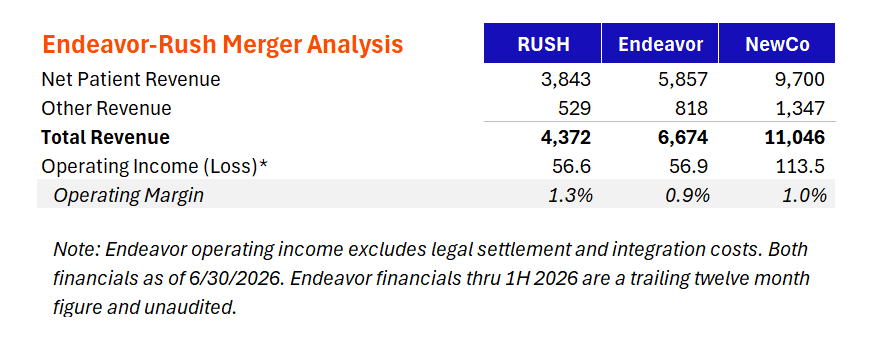
- Chicago mega-merger: Rush and Endeavor Health announced plans to combine: 12 hospitals, 400+ locations, ~$11B in revenue, and $1B from Endeavor over several years for care and research. They’re aiming to close in early 2027.
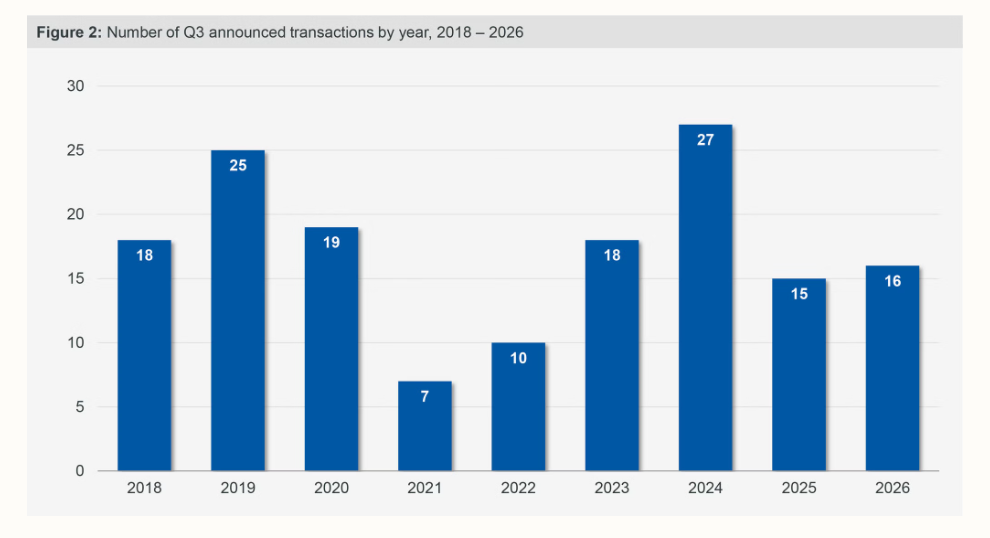
- Kaufman Hall’s Q3 report: 16 deals, $8.2B in transacted revenue, megamergers for the 3rd straight quarter. When 43% of hospitals lose money, the strong ones merge with each other while they still can.
- Bon Secours goes big on ASCs: its affiliate HealthSpan Partners agreed to take Surgery Partners private at $23.50 a share, ~$5.7B in EV, with Bain rolling its ~39% stake. Expected close is Q1 2027. That’s the 2nd Catholic system to buy a national ASC platform after Ascension’s $3.9B AmSurg deal, and a month after Intermountain bought Surgery Partners out of its Idaho hospitals. Nonprofit health systems are emerging as the first choice strategic buyers of ambulatory assets alongside drug distributors, with waning payor presence.
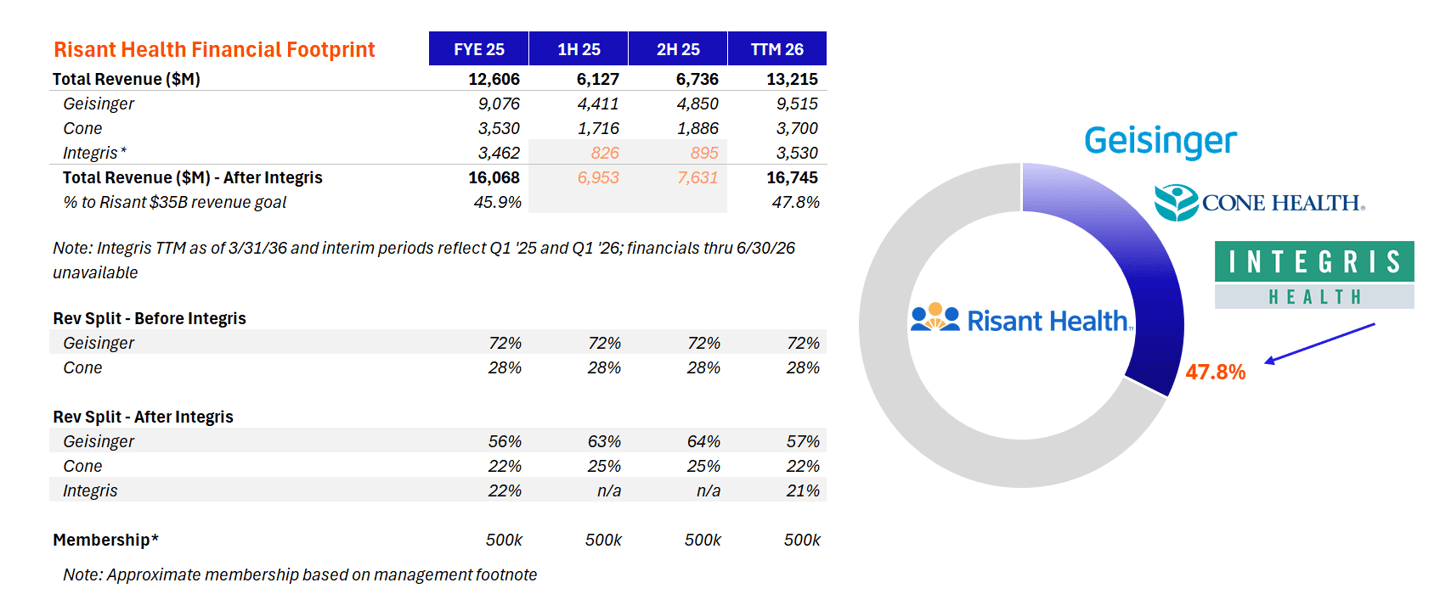
- Kaiser’s Risant signed a definitive agreement for Integris, its 3rd system and first outside PA/NC. The VBC pitch is still the marketing; the proof point so far is nearly 1% of operating-margin improvement at Geisinger.
- Distributors are still writing big checks for provider assets (see McKesson in last month’s recap):
- Cencora is buying American Oncology Network at up to a $2.4B EV, after agreeing in December to take out the rest of OneOncology at a ~$7.4B valuation. A drug wholesaler is now one of the biggest owners of community oncology in the country.
- McKesson is putting ~$1.4B into a 49% stake in Option Care alongside CD&R (~$5.8B EV). Home infusion, meet drug distribution.
- Horizon BCBSNJ agreed to buy Summit Health’s NJ operations, CityMD included. VillageMD paid $8.9B for Summit ~4 years ago. Now it’s a regional piece going to a Blue plan.
- Speaking of VillageMD: Harbor Health is taking 27 more Village Medical clinics in Houston. Walgreens’ primary care exit is a Texas payvidor’s growth plan.
- Humana and BlackRock restructured CenterWell’s primary care JV: BlackRock buys Welsh Carson’s stake (valued ~$2.8B), Welsh Carson’s put option goes away, and Humana gets the option to buy clinics starting in 2028. Nearly 150 clinics. Humana keeps the growth story without paying for it upfront.
- RadNet is buying teleradiology group ONRAD for $350M cash plus 5M shares and up to $210M in earnout.
- The take-private parade continues (Waystar and Definitive last month): Francisco Partners closed its ~$650M take-private of Weave.
- Labcorp agreed to buy Myriad’s prenatal testing business for $210M.
- Kettering Health signed a definitive agreement for 99-bed Knox Community Hospital in Ohio.
- Court Square is buying Center for Vein Restoration (130+ locations) from Cortec, per Healthcare Dealflow.
- PESP’s updated tracker now counts PE behind nearly 1 in 8 private U.S. hospitals.
Notable Investment News & FundingCopy anchor linkCopied
- New healthcare funds kept closing: Consonance closed Fund III at $1.35B, and Sheridan closed Fund IV at $1.1B plus a $245M HCIT fund (LevinPro’s 2026 fund tracker).
- Healthcare buyouts are getting bigger as they get fewer: the average deal hit $3.4B in 1H26, up from $760M in 2025, per Nixon Peabody data via Axios.
- Vera Health raised a $28.5M Series A for clinician-facing AI evidence search. Coming off OpenEvidence’s $15B valuation last month, the race for the doctor’s AI search bar is ON.
- Avante raised a $30M Series A led by Frist Cressey for AI agents serving benefits teams. 70+ employer customers, 385K+ covered lives, and every customer up for renewal has renewed so far.
- Midstream raised a $20M Series A led by Valtruis for AI agents in health system finance (supply chain savings, underpayment recovery). Customers include CommonSpirit, Mount Sinai and Houston Methodist.
Hospitalogy Top Reads and ResourcesCopy anchor linkCopied
- As previously mentioned, this month’s must-read is STAT’s “Inside Epic’s Empire” series from Casey Ross and Brittany Trang: 50+ interviews with former Epic employees, app developers and hospital execs on how Epic controls who gets data access. Part 1 is out; more to come.
- Another banger from STAT, its investigation into No Surprises Act arbitrators and how a nonprofit IDR entity got to a 70% margin.
- Guidehealth says its quality-focused customers moved from 1 or 2 Stars to 4 or better, with roughly a 3:1 return on gap closure. Here is the data platform behind the work. Read the deep dive.*
- Siggy, a mental healthcare startup that pairs AI conversations and daily check-ins with video visits from licensed clinicians just came out of stealth with $6M in pre-seed funding. More from Fierce Healthcare.
- Year two of the $50B rural health fund is out: $10B across all 50 states, with award sizes this time tied partly to each state’s progress on its approved plan. Texas ($281,976,026) and Alaska ($272,653,149) top the list.
- New on the pod today: What happens when genomics stops being a research project and becomes plumbing? Helix co-founder and CEO, Dr. James Lu, says the genome is already cheaper than the primary care visit that would order it. With guest co-host Dr. Jon Slotkin, CMO for Strategy and Growth at Geisinger.
- ASPE’s “Mission vs. Margin” brief on 340B incentives. Read it to see how the administration is framing 340B for the next round of rulemaking.
- Michigan AG’s 116-page complaint against BCBSM. Long, but the market-share sections alone are worth it.
- KFF on 2027 Part D premiums and cost sharing.
- Kaufman Hall’s Q3 2026 M&A report.
*This read is brought to you by one of my brand partners who help make this newsletter possible!
Thanks for the read! Let me know what you thought by replying back to this email.
— Blake